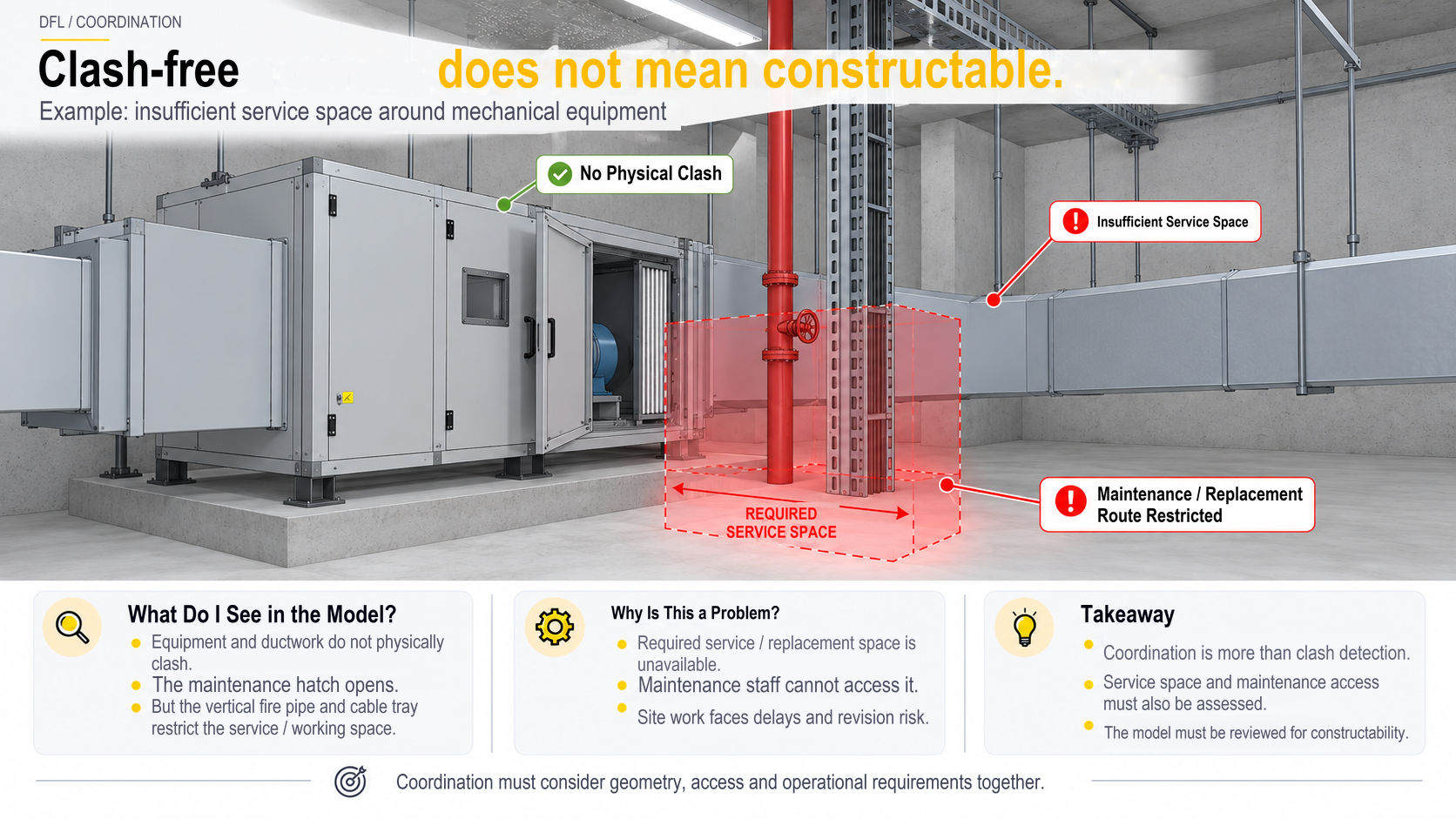
Maintenance / access space
The equipment service panel opens, but another system occupies the servicing volume.
We review discipline models together beyond geometric clashes, considering access, maintenance, installation, tolerances, openings and site constructability.
The aim is not simply to reduce the clash count, but to develop a coordinated project that can be built on site.
Two elements may have no geometric clash, yet access, maintenance space, working clearance or servicing requirements can still make the solution impractical on site.
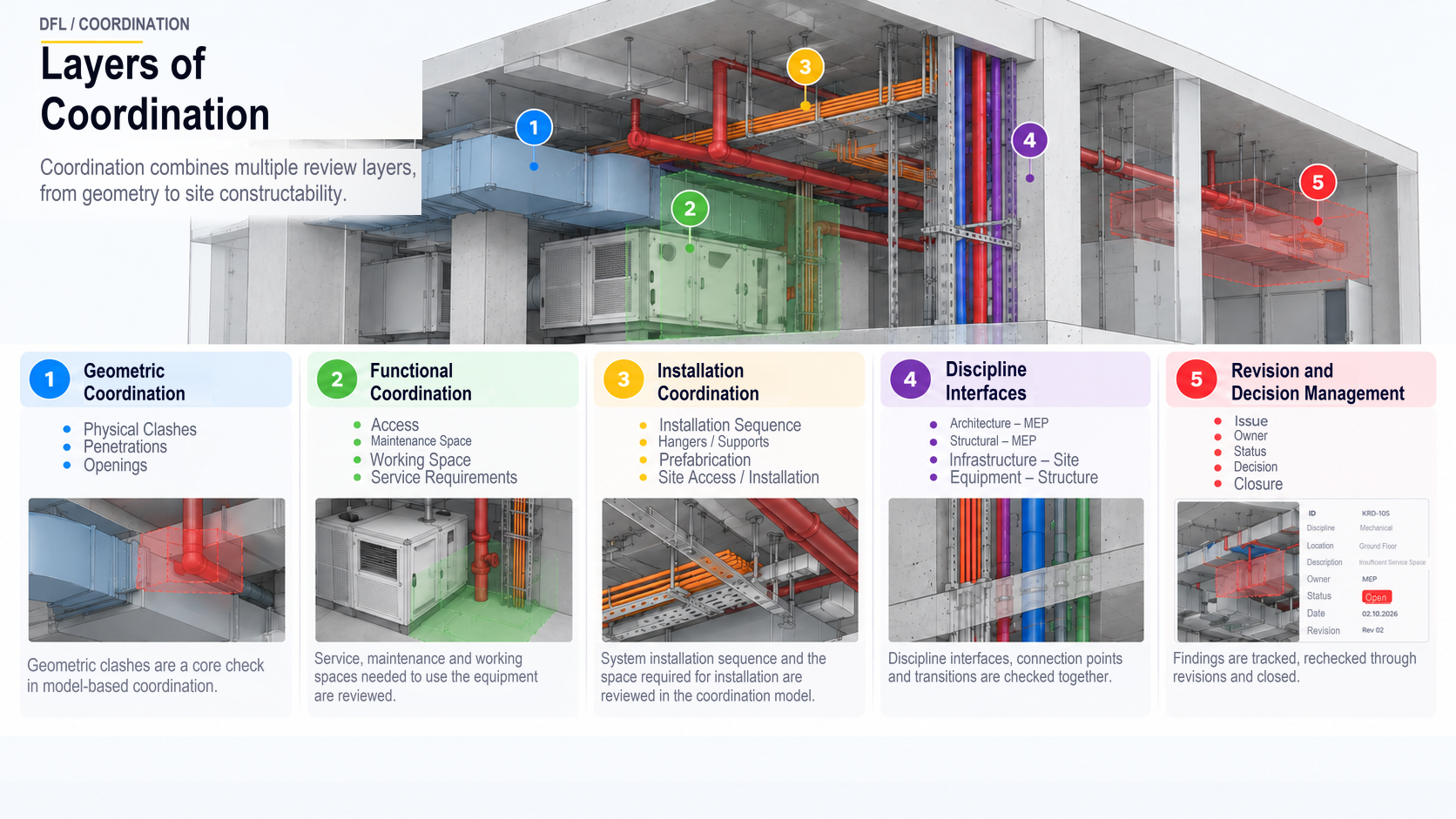
Model-based coordination is more than checking geometric clashes. Multiple layers of review are considered together, extending through to site constructability.
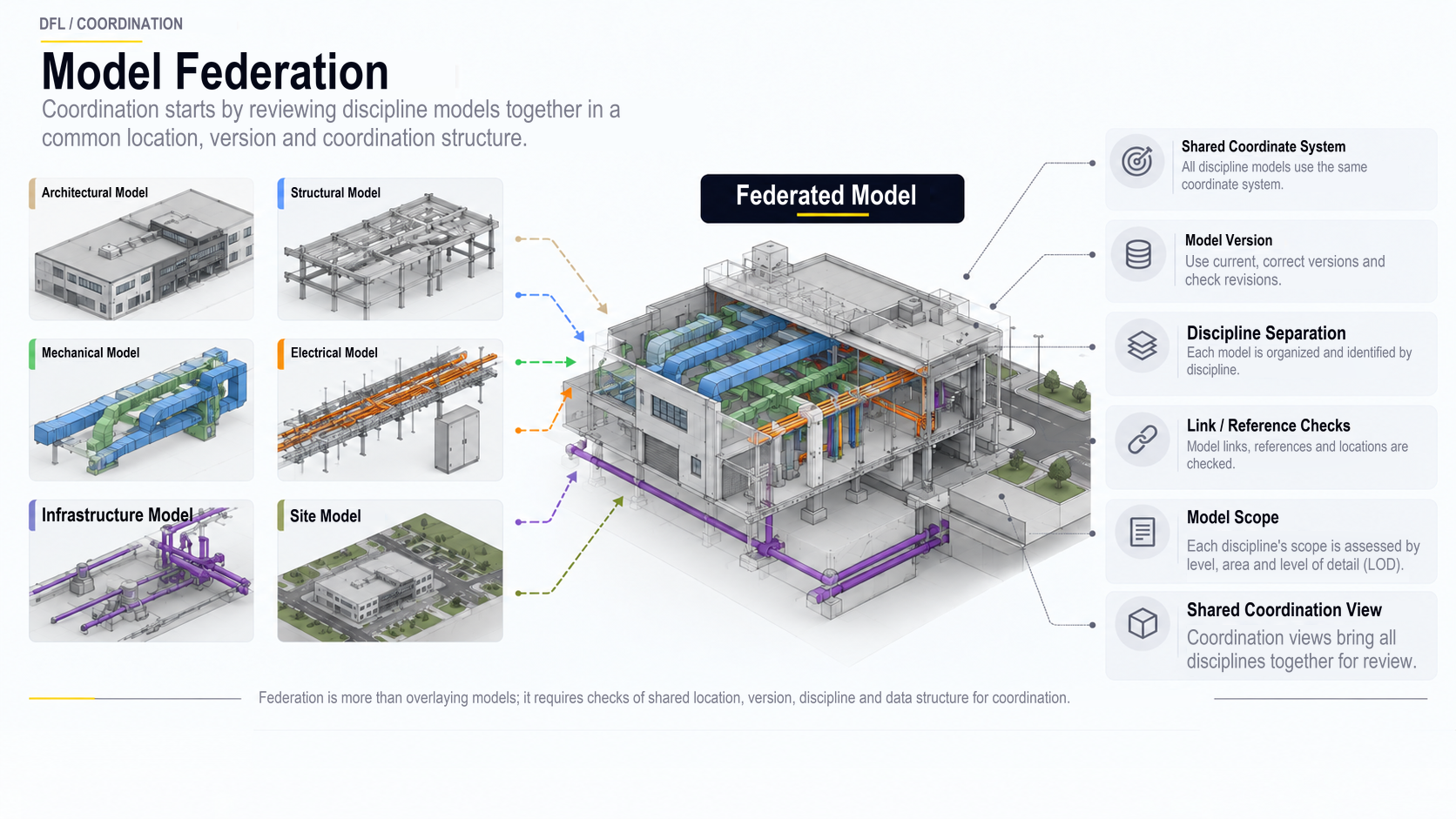
Overlaying discipline models is not enough for federation. Models must be reviewed together within a shared structure for location, version, discipline and coordination.
Geometric clash checks are a fundamental part of coordination, but they do not cover the entire process on their own.
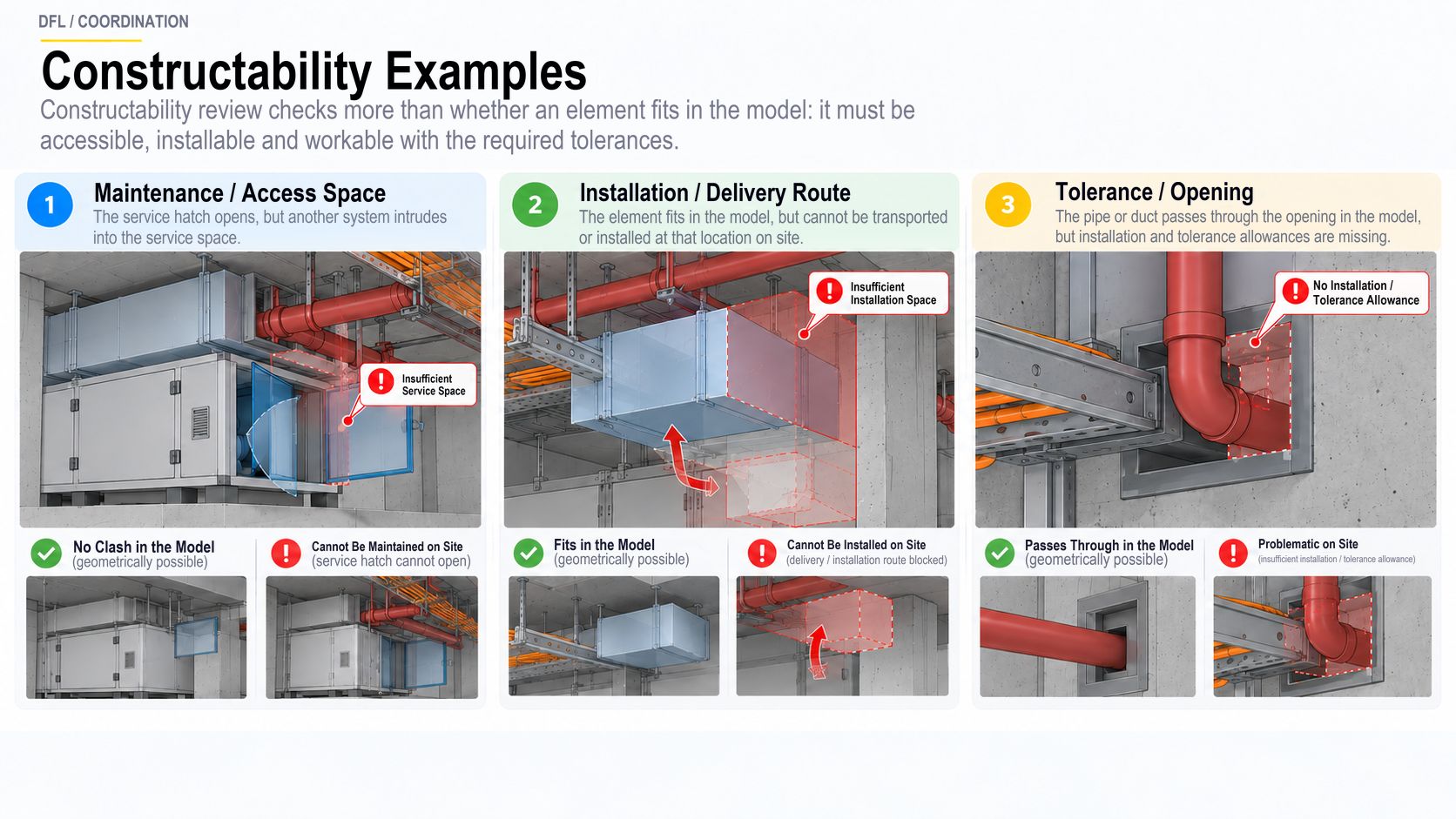
The equipment service panel opens, but another system occupies the servicing volume.
The element fits in its final model position, but cannot be transported or installed there on site.
A pipe or duct theoretically passes through an opening, but the necessary installation clearance and tolerance are missing.
Identified issues are classified, assigned to the relevant discipline, resolved and checked again after revision.
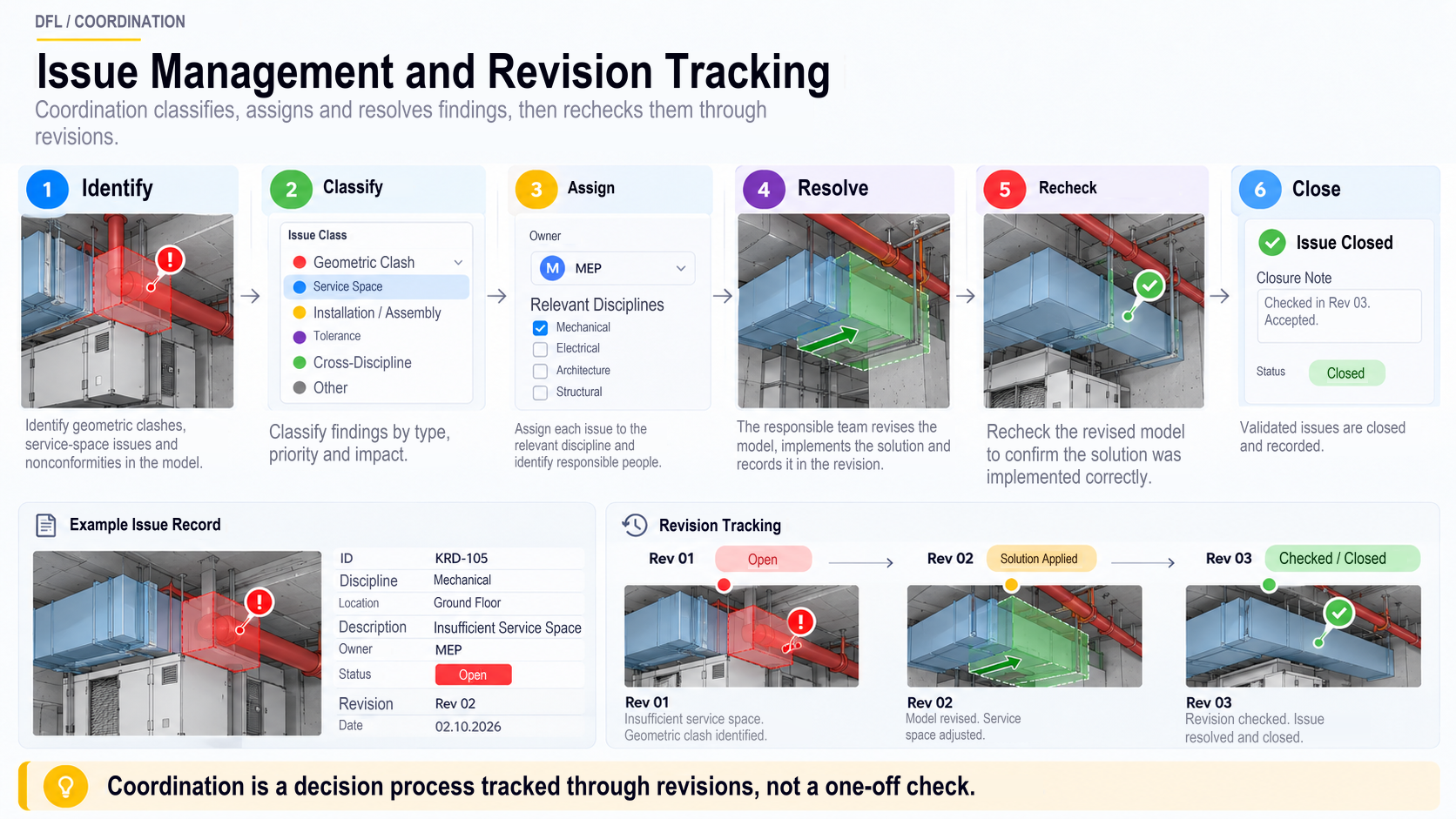
Version, coordinates, scope and model health.
Combine discipline models in a shared environment.
Define the checking sets.
Access, maintenance, installation, tolerances and openings.
Location, description, discipline and owner.
The relevant teams revise their models.
Verify that the solution is correctly incorporated into the model.
Issue closure, coordination status and tracking records.
Deliverables are defined by the project scope and coordination requirements.
DFL reviews models beyond digital geometry, considering constructability, access, maintenance, installation and site conditions.
BIM informed by the site.
BIM Modeling →