NAMET Gümüşova Facility
BIM Modeling and Coordination
ClientNamet Gıda Sanayi ve Tic. A.Ş.
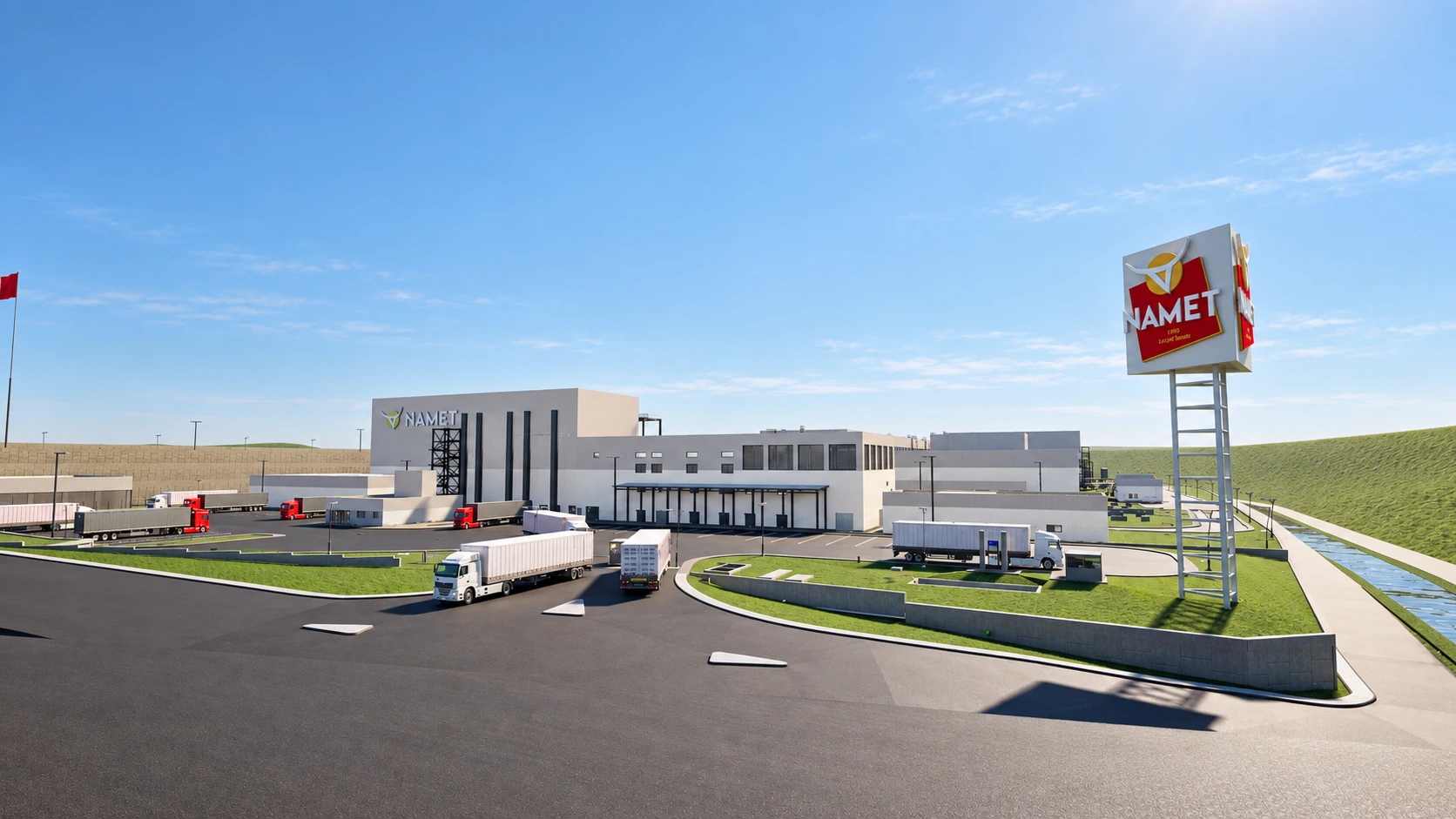
Project overview
In the NAMET project, DFL developed its own modeling scope and brought models from other disciplines into a shared coordination environment, managing multidisciplinary coordination, constructability reviews and revision tracking.
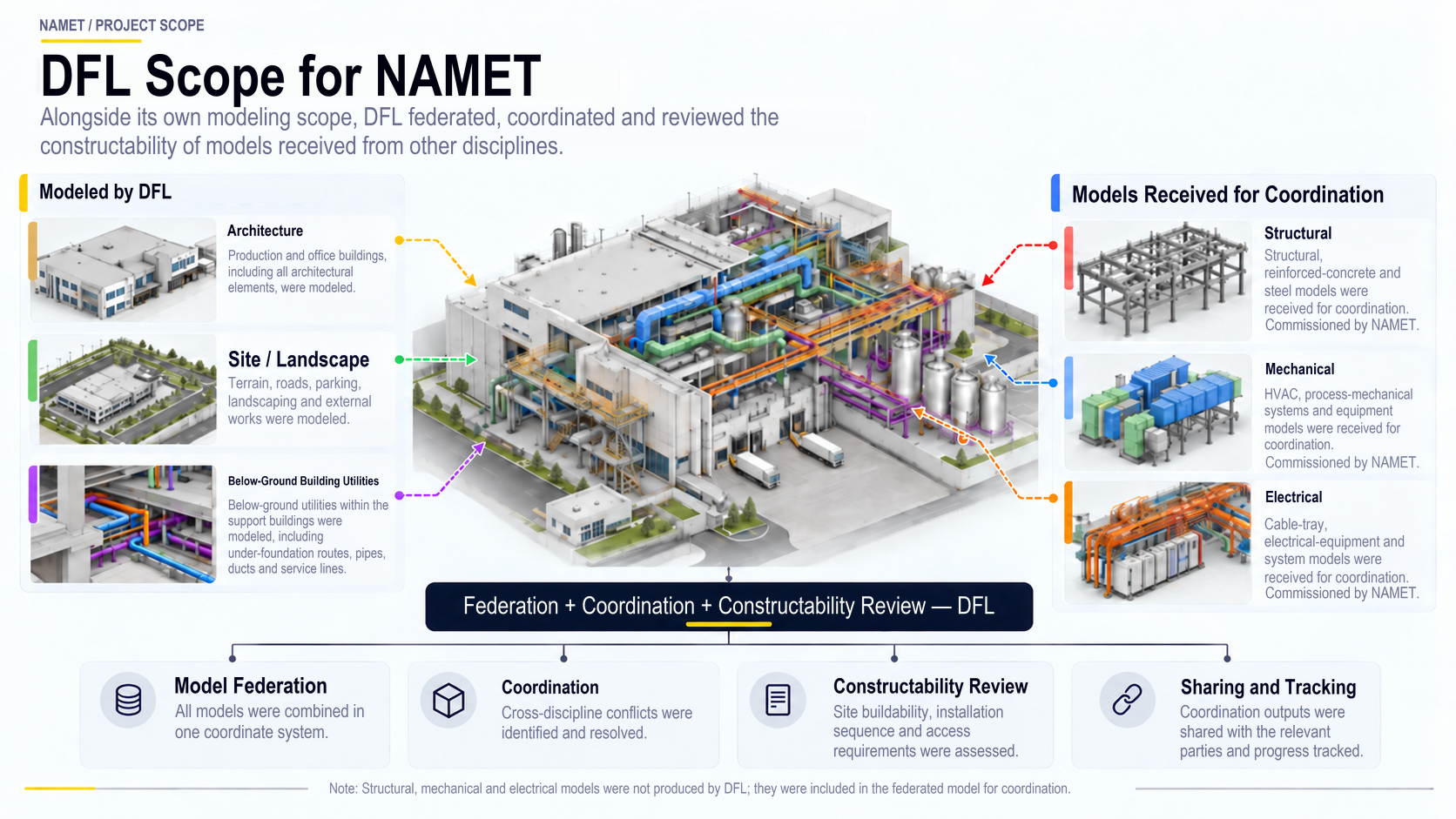
DFL’s scope for NAMET
Models developed by DFL
- Architecture
- Site / Landscape
- Below-ground internal infrastructure
Below-ground internal infrastructure within the support structures was also part of DFL’s scope.
Models received for coordination
- Structural — commissioned by NAMET
- Mechanical — commissioned by NAMET
- Electrical — commissioned by NAMET
Alongside its own modeling scope, DFL carried out federation, coordination and constructability reviews of models received from other disciplines.
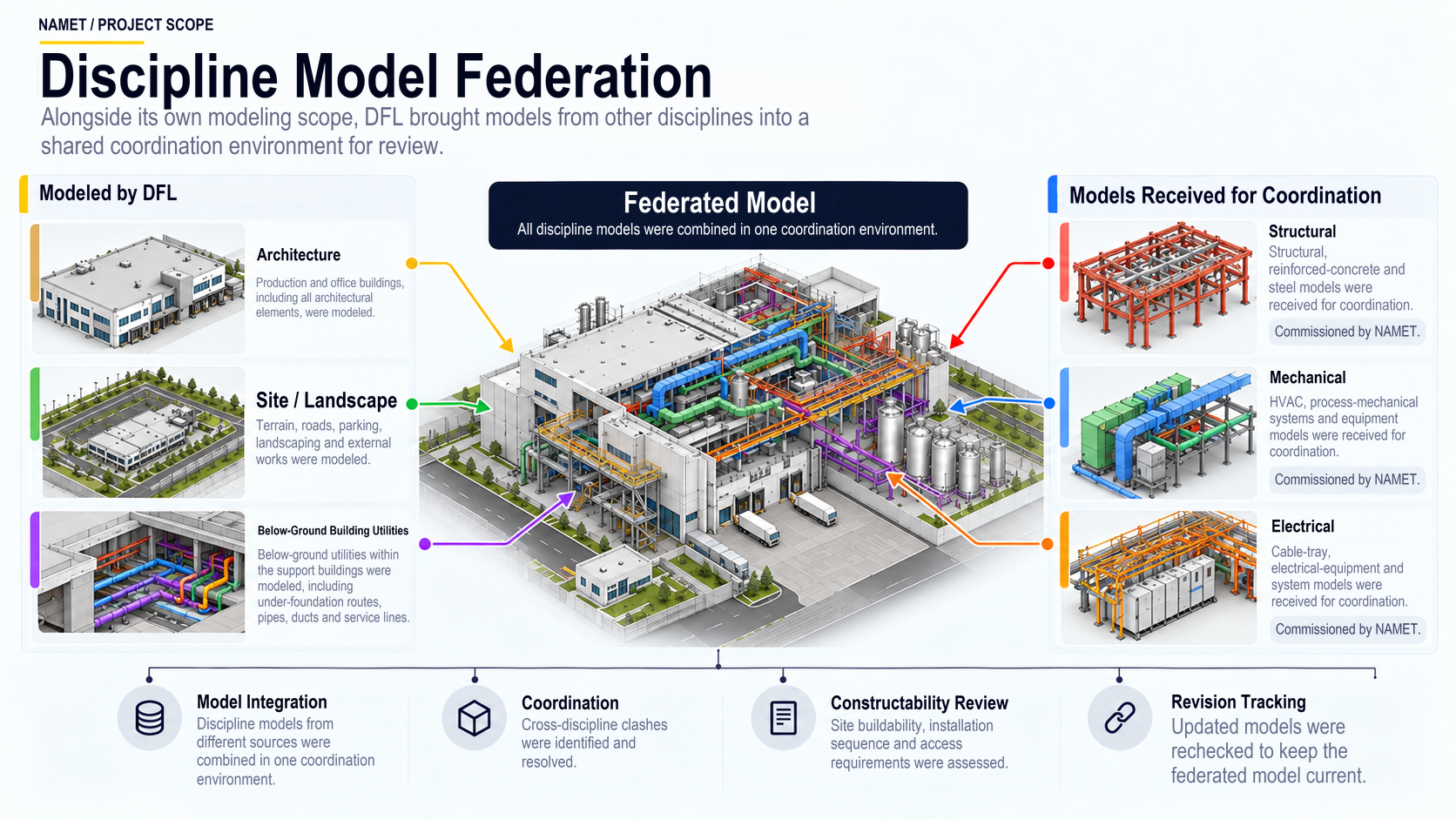
Discipline models were brought together in a shared coordination environment.
The architectural, site/landscape and below-ground internal infrastructure models developed by DFL were reviewed in a common federated model alongside the structural, mechanical and electrical models commissioned by NAMET.
- Model integration
- Shared coordination
- Discipline interfaces
- Constructability
- Revision tracking
Being clash-free in the model was not enough.
The federated model was reviewed not only for geometric clashes, but also for access, maintenance, installation, reserved openings, discipline interfaces and site constructability.
- Discipline clashes
- Access and maintenance spaces
- Installation sequence
- Reserved spaces and openings
- Site constructability
- Rechecking after revisions
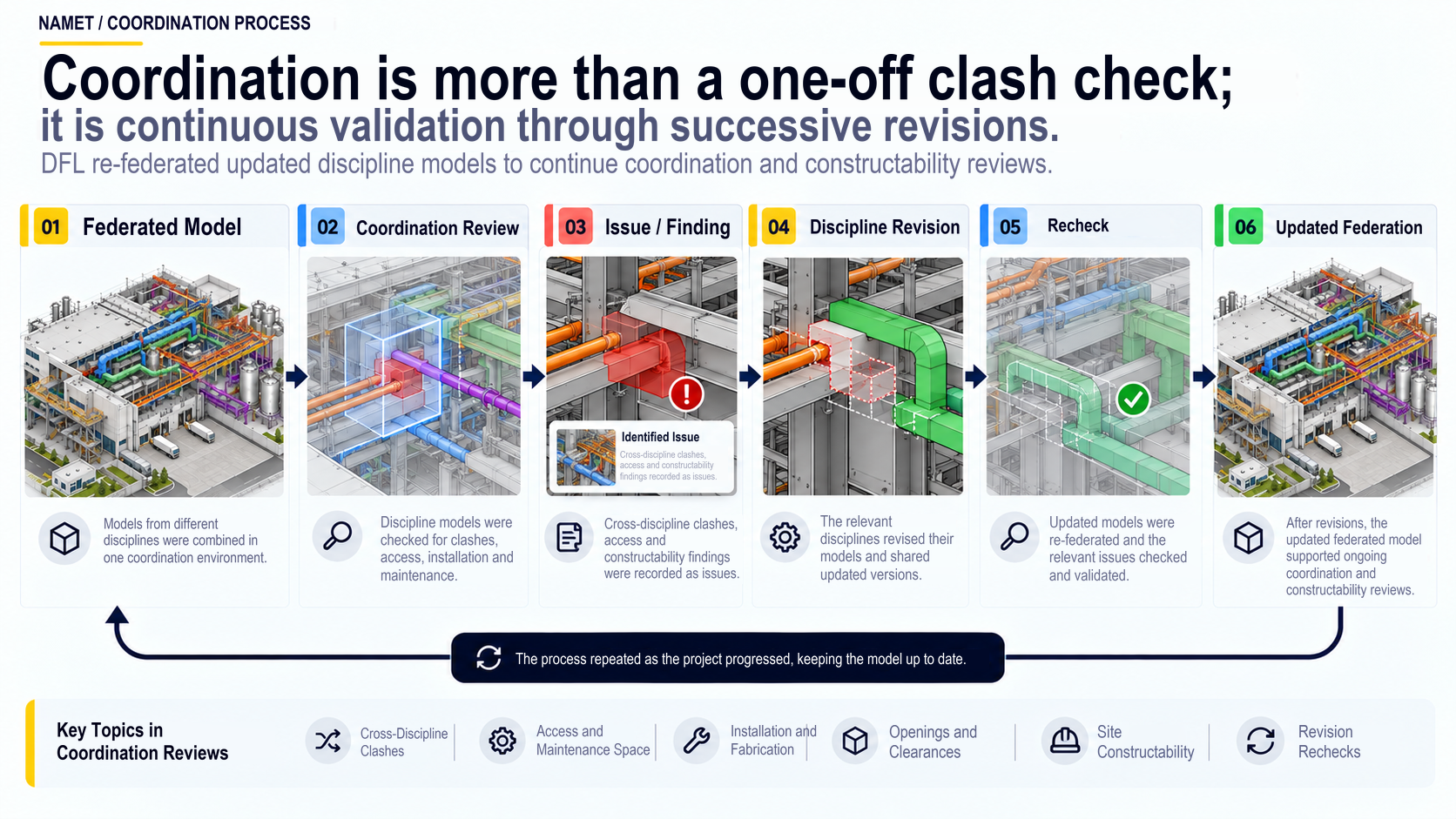
Coordination was an iterative verification process, progressing through revisions.
Updated discipline models were brought back into the federation, and the relevant coordination and constructability reviews were repeated.
- Federated Model
- Coordination Review
- Issue / Finding
- Discipline Revision
- Recheck
- Updated Federation
Following revisions, the federated model was kept up to date and open issues were reviewed again.
Information used / produced during the project
- Discipline BIM models
- Federated model
- Coordination reviews
- Clash / issue assessments
- Constructability reviews
- Revision tracking
- Coordination outputs
Project approach
The aim was to bring different disciplines into one coordination environment, making project decisions more traceable and constructible through the model.
This approach supported systematic tracking of coordination issues as revisions progressed.
Let’s assess a similar project together.
Let’s define the modeling, federation and coordination scope around your project requirements.